

Pan.bio Blog
Insights
from the Lab
The Pan.bio blog covers bioinformatics workflows, AI-powered genomic analysis, clinical variant interpretation, and population genomics research. Written by our team of bioinformaticians, clinical scientists, and AI engineers, these articles explore the tools, methods, and discoveries shaping modern genomic medicine.
-
Your Genome Was Never in the Study, Only 1 in 600: Why Arab DNA Is the Biggest Blind Spot in Modern Medicine
Arab genetic architecture is its own genomic landscape, shaped by thousands of years of a unique demographic history, geographic isolation, and cultural practices that have no real parallel in the populations that dominate global genomic databases.
Pan.bio Team Read article -
LLM’s Secret Sauce: Not Just Prompts, but Context Engineering
If you haven’t been living under a rock, chances are that you have come across the buzzword “prompt-engineering” in the past few years. And yes, while it has been recognized as an official job title in the tech industry, you probably have been practicing it on your own all along.
-
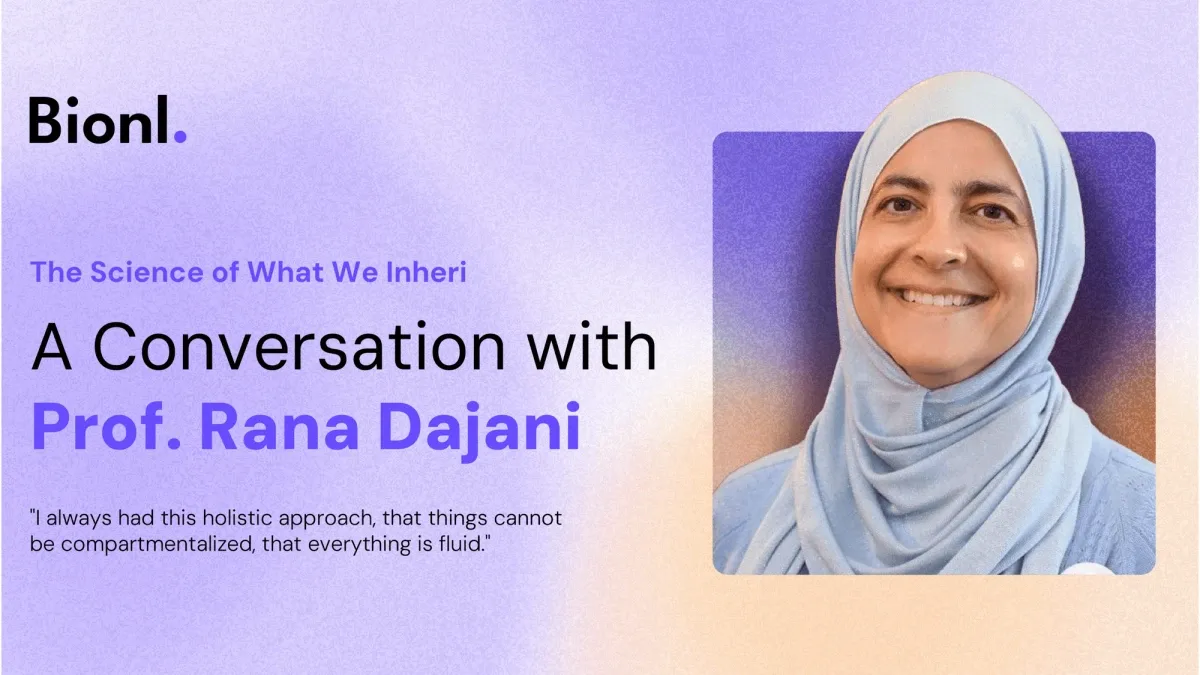
The Science of What We Inherit: A Conversation with Prof. Rana Dajani
Prof. Rana Dajani led the first genome-wide association study on Middle Eastern populations and discovered the first evidence of intergenerational epigenetic inheritance of trauma.
Pan.bio Team Read article -
Vaccines and Genomics: A Synergistic Approach to Disease Prevention
This blog explores the relationship between vaccines and genomics, the importance of understanding genomic data in vaccine discovery, and how bioinformatics might accelerate the process of vaccine discovery.

-
Helpful or Harmful? How to Trust AI-Generated Summaries
AI summaries can support research and clinical work in several complementary ways. They can condense long and complex text into clear takeaways such as the primary endpoint, population size, and outcomes, giving readers a head start before committing to the full text.
Layla Bitar 7 min -
How Are BioAgents Shaping the Future of Biomedical Applications and Clinical Decision Support?
introducing BioAgents, specialized agentic systems built on large language models (LLMs) that are designed to transform bioinformatics and clinical decision support.
Abdullah Al-Atia 6 min -
30–50% Faster in building AI Workflows? Exploring GPT-5 in Bioinformatics
30–50% Faster in building AI Workflows? Exploring GPT-5 in Bioinformatics GPT-5 introduces faster responses. In bioinformatics, GPT-5 streamlines workflows by drafting pipelines, configs, and annotations, reducing glue work and acting like a knowledgeable collaborator.
Abdullah Al-Atia 6 min -
When to Use nf-core/sarek and When Another Pipeline Might Be Better
nf-core/sarek is an open-source, Nextflow-based pipeline ideal for reproducible germline and somatic variant calling in both research and clinical settings. Platforms like Bionl simplify adoption by offering a no-code interface and ready-to-run configurations.
Fatima Farhan 6 min -
Bion: Our Multi-Agent Biomedical System
This post introduces Bion, a multi-agent AI system designed to streamline biomedical research by automating data analysis, code generation, and visualization within a no-code notebook interface.
Layla Bitar 6 min -
Democratizing Genomic Research: nf-core and the Power of No-Code, Reproducible Pipelines
This article explores the importance of nf-core pipelines in modern bioinformatics, breaking down how they enable reproducible, standardized, and scalable genomic data analysis.
Layla Bitar 3 min -
Reproducibility in Bioinformatics Research with Bionl
This article explores the challenges and solutions to achieving reproducibility in bioinformatics research, with a special focus on how Bionl.ai can facilitate this crucial aspect.
Tasnim Nour 3 min -
Bioinformatics Research: Illuminating the Path of Evolution
Bioinformatics, a field at the intersection of computer science and biology, is growing at a remarkable pace. It empowers researchers to collect and analyze vast datasets related to genes, proteins, and various biological molecules, revolutionizing our understanding of life's intricate processes.
Tasnim Nour 4 min -
Unlocking the Final Frontier: The Completion of the Human Genome Sequence and the Y Chromosome
In a monumental scientific achievement, researchers have recently completed the sequencing of the human genome, including the elusive Y chromosome. This milestone marks a new era in genomics, offering unprecedented insights into human biology, evolution, and the potential for personalized medicine.
Tasnim Nour 3 min -
Bioinformatics Role in Single-Cell Research
Single-cell biology is an emerging field that has shifted the paradigm from studying cells in bulk to understanding them at an individual level. This shift has led to groundbreaking discoveries in cell development, differentiation, and disease mechanisms.
Tasnim Nour 4 min -
Transcriptomics: on genes and diseases with Bionl.ai
Transcriptomics is more than just a buzzword in the realm of bioinformatics; it's a revolutionary approach to understanding the intricate world of genes. Imagine having the ability to read the 'script' of a cell, tissue, or even an entire organism.
Tasnim Nour 4 min -
The Effect of Genetics on Drug Metabolism
Genetics plays a key role in how individuals metabolize drugs, influencing both effectiveness and risk of side effects. Real-world cases like codeine, citalopram, and azathioprine highlight the clinical impact of tailoring treatments through genetics.
Bayan Abu Alragheb 3 min -
Hearing Loss Explained: Syndromic, Non-Syndromic, and the Power of Bioinformatics
Genetic mutations play a major role, influencing inheritance patterns and disease presentation. Bioinformatics and platforms like Bionl.ai are advancing research, enabling better diagnosis and personalized treatment.
Bayan Abu Alragheb 3 min -
Understanding the Difference Between Genetics and Genomics
Genetics and genomics are two terms that are often used interchangeably in the field of biological sciences. This article aims to shed light on the difference between genetics and genomics, and how each field contributes to our understanding of life and disease.
Bayan Abu Alragheb 3 min -
Unlocking the Potential of Genomic Medicine with Bionl
Genomic medicine, a branch of medical science that uses genomic information to guide patient care, is heralding a new era in healthcare. By analyzing an individual’s genetic makeup, healthcare professionals can make more informed decisions.
Tasnim Nour 3 min -
The Revolution of Drug Discovery: The Impact of Artificial Intelligence
In the ever-evolving landscape of healthcare, drug discovery remains one of the most critical and complex processes. The development of new drugs is essential for tackling diseases and improving the quality of life.
Tasnim Nour 7 min -
Personalized Medicine and Bioinformatics: The Future of Healthcare
The future of healthcare lies in the convergence of personalized medicine and bioinformatics, as these rapidly advancing fields are set to revolutionize diagnostics, treatment, and disease prevention.
Abdullah Al-Atia 3 min -
Your Guide to Understanding Statistical Significance
Statistical significance is one of those concepts that we frequently hear but rarely comprehend. When someone asserts that data validate their thesis, we nod and accept it, assuming that statisticians have performed intricate calculations that have produced an unquestionable outcome.
Ahmad Jadallah 9 min -
How will Large Language Models (LLMs) Transform Biomedical Research?
Large language models, such as GPT-3, have the potential to revolutionize biomedical research by helping scientists quickly and accurately analyze vast amounts of data.
Ahmad Jadallah 3 min



researchers trust Pan.bio to power their genomic discovery
No credit card required · Start in minutes